

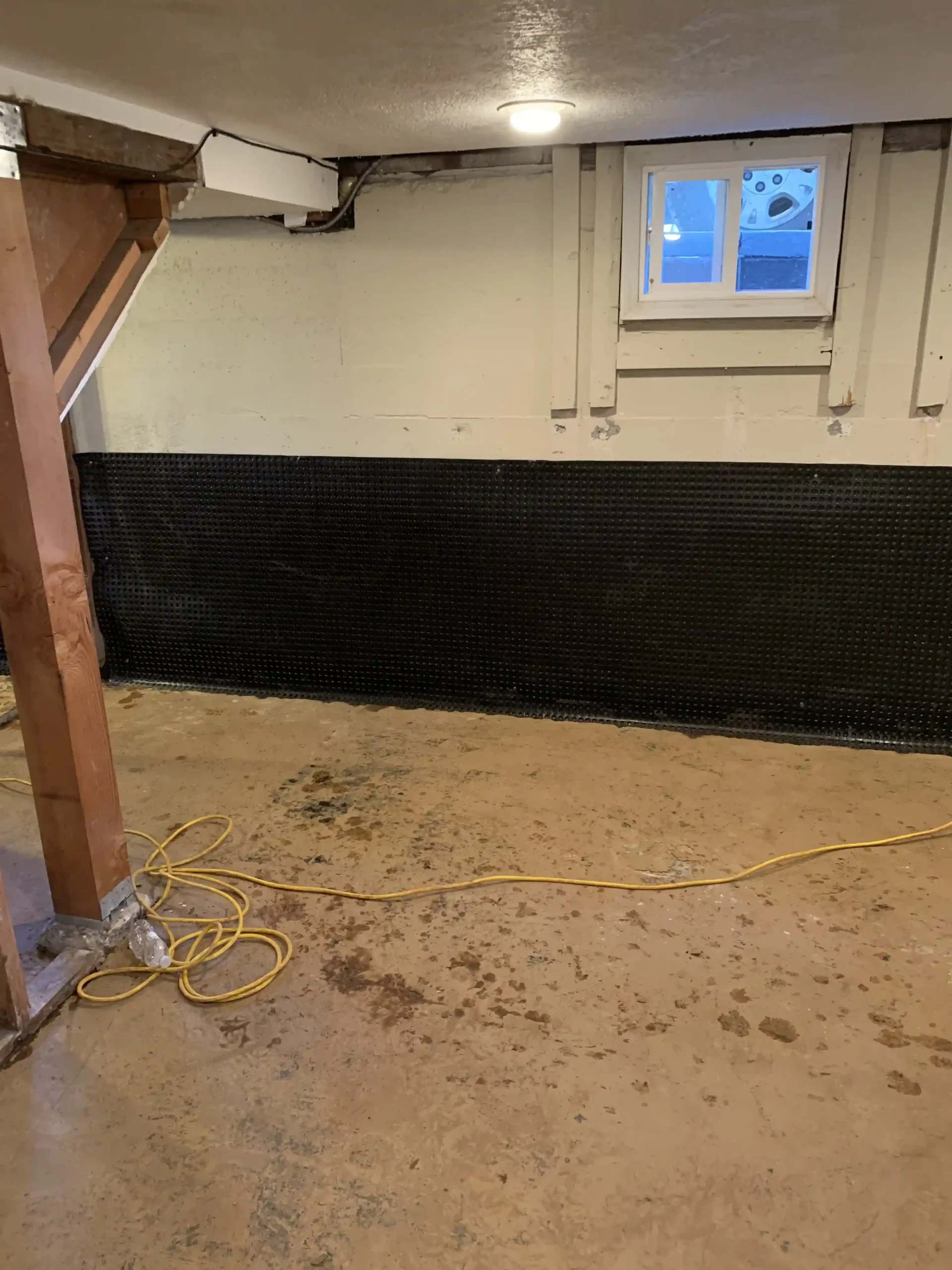
Recognizing the early signs of dry rot can save homeowners thousands before framing suffers catastrophic failure. In Centralia, prolonged Pacific Northwest dampness creates prime conditions for wood-decaying fungi, an ongoing threat documented by the USDA Forest Service. Much like the moisture challenges we manage during Ridgefield moisture mitigation projects, Lewis County properties frequently trap ambient crawl space vapor. Catching decay early protects your posts, joists, and subfloors from extensive damage.
Despite its common name, dry rot cannot initiate or spread in dry conditions. Wood-decay fungi require elevated moisture content—typically 20% or higher—to germinate and feed on the cellulose and hemicellulose that give timber its load-bearing strength. Once water enters a crawl space, rim joist, subfloor, or sill plate, wood decay accelerates.
Advanced Waterproofing brings over 10 years of specialized experience resolving groundwater intrusion, foundation seepage, and crawl space moisture problems across Centralia, Chehalis, Napavine, Rochester, Grand Mound, Tenino, and throughout Lewis County. If your home sits on an older foundation or in a damp river valley, watching for the early indicators of dry rot Centralia WA protects your home from the ground up.
Why Recognizing Signs of Dry Rot Matters in Lewis County
Centralia’s climate and topography create specific moisture risks. Nestled within the Chehalis River basin, many neighborhoods contend with shallow water tables, slow-draining soils, and river-adjacent humidity. Properties near Historic Downtown Centralia, Fort Borst Park, Seminary Hill, Centralia College, and the I-5 corridor often sit over crawl spaces that trap evaporating groundwater.
When winter rains saturate Lewis County soils, hydrostatic pressure forces moisture through concrete stem walls, unsealed vents, and exposed dirt floors. The USDA Forest Products Laboratory notes that fungi break down the cellular walls of structural timber whenever moisture remains trapped with inadequate airflow. Treating or sistering damaged joists without removing the underlying water source guarantees that fungal spores will reinfect the new wood.
Comparing Wood Conditions: Healthy vs. Active Decay
| Evaluation Stage | Visual Appearance | Physical Texture | Structural Integrity |
| Healthy Structural Lumber | Light, natural wood tone; distinct grain lines | Firm, rigid, resists screwdriver penetration | 100% load-bearing capacity |
| Early Moisture Stress | Dark surface staining, water tidemarks, white efflorescence | Slightly damp to the touch, fibers begin softening | Superficial strength remains; fungal spores active |
| Advanced Brown Rot (Dry Rot) | Dark brown/charred look; cubical cross-grain cracking | Soft, crumbly, powdery, easily punctured | Severe strength loss; floor framing begins to deflect |
7 Warning Signs of Dry Rot in Your Centralia Home
1. Wood Feels Soft, Spongy, or Crumbles Under Pressure
Healthy dimensional lumber should offer firm mechanical resistance. Wood compromised by fungal decay loses its internal cohesion:
- A flathead screwdriver or awl sinks effortlessly into joists or sill plates without resistance.
- The surface feels spongy, springy, or fibrous when pressed.
- Advanced sections break apart into powdery debris under light finger pressure.
Check the perimeter rim joists, mudsills resting directly on concrete stem walls, and structural posts beneath wet utility areas like kitchens, laundry rooms, and bathrooms.
2. Floors Feel Bouncy, Sagging, or Uneven
When support beams and subfloor panels deteriorate, the flooring system loses its load-carrying capacity. You may notice:
- Noticeable floor deflection or a “trampoline” feel when walking across living spaces.
- Gaps opening between baseboards and hardwood or tile flooring.
- Interior doors sticking in their jambs or swinging open on their own due to shifting framing.
- Furniture visibly listing toward room centers or exterior load-bearing walls.
Sagging floors indicate that underlying joists have already lost structural mass. Crawl space framing must be assessed to determine whether moisture has compromised the main carrier beams.
3. Cubical Cracking and Wood Discoloration
True dry rot (Serpula lacrymans) and other brown-rot species digest cellulose, leaving behind brittle, brown lignin. This causes a distinct visual pattern known as “cubical cracking”:
- Deep fissures run perpendicular to the wood grain, breaking the timber into rough cubes or blocks.
- The wood takes on a dark, scorched, or deeply weathered appearance.
- The timber visibly shrinks, pulling away from concrete foundation bolts and joist hangers.
If exposed subflooring or crawl space framing displays this cross-grain fractured pattern, active decay has stripped the wood of its tensile strength.
4. Persistent Musty, Earthy Odors Indoors
Fungal colonies and damp crawl space earth off-gas microbial volatile organic compounds (mVOCs). Through the “stack effect,” warm air rising through your home’s living areas pulls up to 50% of its air volume directly from the crawl space below.
- A damp, mushroom-like, or sour odor lingers in hallways, floor vents, and lower closets.
- The smell intensifies after consecutive days of rain or when running heating systems.
- Masking the scent with air fresheners only covers up what the U.S. Environmental Protection Agency (EPA) identifies as a primary indicator of active indoor moisture intrusion.
5. Visible Fungal Spore Dust, Strands, or Fruiting Bodies
In advanced infestations, wood-decay fungi transition from feeding within the timber to reproduction:
- Hyphae and Mycelium: Silky white or silver-gray sheet-like fungal veils spread across damp subflooring and framing.
- Rhizomorphs: Tough, root-like strands that transport moisture from damp ground directly into dry wood.
- Fruiting Bodies: Bracket-like or pancake-shaped growths (sporophores) with rusty-red, orange, or ochre centers that shed fine reddish dust (spores) across crawl space vapor barriers.
6. Standing Water or Condensation in the Crawl Space
Wood cannot decay without sustained dampness. Inspecting the crawl space during Centralia’s rainy season often reveals the root environmental causes of wood rot:
- Standing pools of water collecting along interior foundation footings.
- Bare, unsealed soil actively evaporating moisture into structural framing.
- Failing or torn 6-mil plastic barriers allowing moisture vapor to migrate upward.
- Heavy water droplets condensing along cold water pipes and fiberglass batt insulation.
If insulation hangs down in heavy, waterlogged swags, it acts like a wet sponge pinned directly against the floor joists.
7. Moisture Ants and Wood-Destroying Organisms
Insects often signal hidden decay before homeowners notice structural movement. Moisture ants (Lasius spp.), dampwood termites, and subterranean pests do not attack sound, dry wood—they excavate and nest exclusively within softened, fungal-decayed timber.
- Piles of coarse sawdust or wood shavings (frass) accumulating beneath floor joists or near baseboards.
- Winged reproductive ants swarming near foundation vents or bathroom access panels in late summer.
- Visible ant trails traveling between damp crawl space ground and the subflooring.
Exterminating pests eliminates the insects, but the decay will continue until you correct the underlying crawl space moisture Centralia WA issues feeding the colony.
                       [Crawl Space Moisture Detected]
                                      │
         ───────────────────────────────────────────────────────────
        │                                                           │
 [Surface Plumbing / Gutter Issue]                          [High Water Table / Soil Seepage]
        │                                                           │
 [Targeted Pipe / Downspout Repair]                         [Comprehensive Waterproofing]
  - Fix supply/drain leaks                                    - Interior perimeter drainage
  - Extend exterior downspouts 6ft+                           - Submersible sump pump system
  - Grade topsoil away from foundation                        - 20-mil sealed crawl space encapsulation
        │                                                           │
         ───────────────────────────────────────────────────────────
                                      │
                         [Remediate Damaged Lumber]
                          - Sister damaged joists
                          - Replace dry-rotted subflooring
                          - Lower relative humidity below 55%
Stopping Dry Rot at the Source: Crawl Space Waterproofing
Eliminating wood decay requires cutting off the moisture supply permanently:
- Groundwater Management: If standing water pools in the crawl space, an interior French drain system routes seepage to an automated sump pump installation before it reaches framing timbers.
- Sealed Encapsulation: Installing a heavy-duty, reinforced crawl space vapor barrier across 100% of the crawl space floor and running it up foundation stem walls prevents soil dampness from reaching floor joists.
- Active Humidity Control: Running a commercial-grade, low-temperature dehumidifier maintains relative humidity below 55%, halting fungal metabolism and preserving structural lumber.
- Structural Wood Repair: After drying the environment, rotted joists, beams, and subfloor panels are safely sistered or replaced with pressure-treated lumber to restore full floor stability.
Frequently Asked Questions
Can dry rot spread without water? No. Wood-decay fungi require an active moisture source to survive and spread. While true dry rot (Serpula lacrymans) can transport water short distances through root-like hyphae to feed on nearby dry timber, the organism must remain connected to an active water reservoir.
What is the difference between mold and dry rot? Mold feeds primarily on surface dirt and organic finishes without breaking down the cellular structure of structural wood. Dry rot fungi actively digest structural cellulose and lignin, destroying the wood’s load-bearing capacity and causing physical collapse.
Does homeowners insurance cover wood rot repair in Centralia? Most standard insurance policies exclude dry rot, treating it as preventable, long-term deferred maintenance. However, if the rot is directly tied to a sudden, accidental plumbing failure that was promptly reported, partial coverage for repairs may apply.
How do I know if floor framing needs replacement or just drying out? If a screwdriver easily penetrates more than 1/4 inch into joists or beams, or if cubical cracking is visible across load points, the lumber has lost its structural rating and must be structurally reinforced or replaced.
Schedule a Crawl Space Evaluation in Centralia, WA
Dry rot is a structural symptom of a moisture problem. If you notice sagging floors, persistent musty smells, or visible dampness beneath your home, do not wait for minor timber decay to turn into framing failure.
Contact Advanced Waterproofing today to schedule a comprehensive evaluation. Our specialists pinpoint where groundwater and humidity enter your structure and engineer a lasting crawl space waterproofing Lewis County solution to keep your foundation dry and structurally sound.