

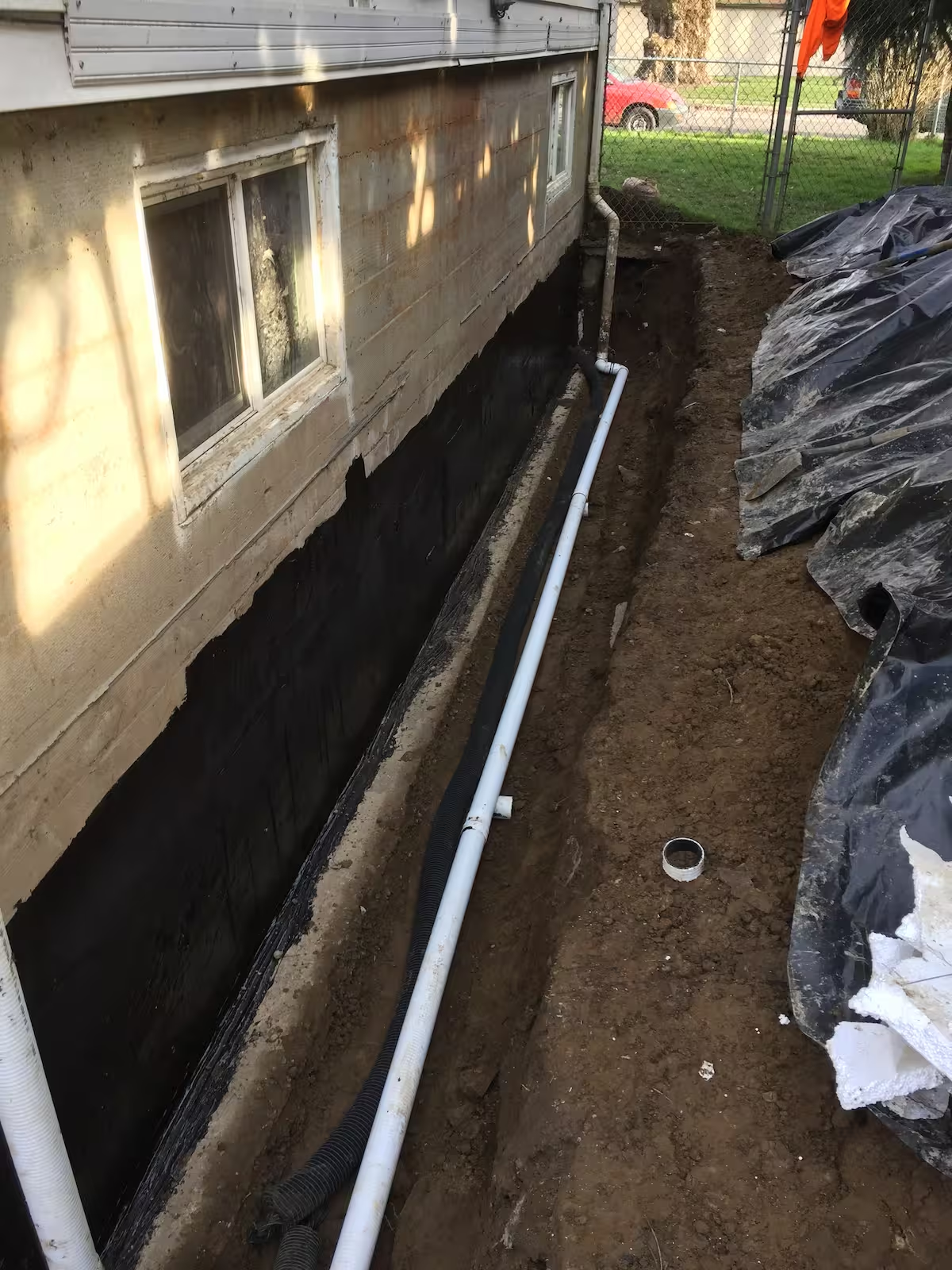
Sloped foundation problems in Ridgefield WA can develop when hillside runoff, saturated soil, poor grading, soil creep, and hydrostatic pressure push moisture against a home’s foundation. Homes built on sloped properties may offer great views and natural drainage, but they can also face unique foundation and waterproofing challenges when water collects near the structure.
In Ridgefield, homes near Gee Creek, Abrams Park, Prune Hill transitions, the Ridgefield National Wildlife Refuge, and newer hillside developments may experience drainage concerns, crawl space moisture, basement leaks, bowing walls, foundation cracks, or water intrusion after heavy rain.
Advanced Waterproofing helps Ridgefield and Southwest Washington homeowners identify moisture problems and choose long-term solutions such as foundation waterproofing, French drains, sump pumps, crawl space repair, drainage improvements, and foundation moisture control.
Table of Contents
Why Sloped Properties in Ridgefield Require Special Attention
Ridgefield combines rolling terrain, waterways, wetlands, seasonal rainfall, and rapidly developing residential areas. Properties can vary considerably in elevation, grading, drainage, and soil conditions.
The area surrounding Gee Creek provides a good example of Ridgefield’s relationship with water and terrain. Ridgefield also sits between the Interstate 5 corridor and the lower areas surrounding Lake River, the Columbia River floodplain, and the Ridgefield National Wildlife Refuge.
Water naturally moves downhill.
When rain falls on a sloped property, runoff may travel toward the lowest point available. If a house, crawl space, basement, retaining wall, or foundation interrupts that path, water can begin accumulating in the soil around the structure.
A properly designed drainage system helps move that water away.
When drainage is inadequate, however, saturated soil can place significant pressure against the foundation.
That is where waterproofing and drainage become especially important.
What Is Soil Creep?
Soil creep is the slow downhill movement of soil caused by gravity and influenced by factors such as moisture, slope, soil composition, vegetation, erosion, and repeated wet-and-dry cycles.
Unlike a dramatic landslide, soil creep can happen gradually.
That makes it easy for homeowners to overlook.
Over months or years, subtle movement may begin affecting landscaping, retaining structures, drainage systems, walkways, patios, and potentially the foundation itself.
Signs that may warrant further investigation include:
- Cracks developing or expanding in foundation walls
- Retaining walls leaning or bowing
- Soil pulling away from portions of the property
- Fence posts beginning to lean downhill
- Uneven patios or walkways
- Changes in exterior grading
- Doors or windows becoming difficult to operate
- Uneven or sloping floors
- Water repeatedly collecting along one side of the foundation
Not every crack or uneven surface indicates soil creep. However, recurring movement combined with moisture problems deserves professional evaluation.
Why Water Makes Slope Problems Worse
Water changes how soil behaves.
During extended periods of rain, soil absorbs moisture and becomes heavier. Some soils also change volume as their moisture content increases and decreases.
For a home on relatively flat terrain, saturated soil can already create foundation and drainage concerns.
On a slope, gravity introduces another force.
Water traveling downhill may concentrate against the uphill side of the foundation. If the property lacks effective surface drainage, subsurface drainage, footing drainage, or another reliable path for water to escape, pressure can continue increasing.
That leads to the second major concern: hydrostatic pressure.
What Is Hydrostatic Pressure Around a Foundation?
Hydrostatic pressure is pressure created by water accumulating in soil.
Imagine the soil next to your basement or foundation becoming saturated during several days of heavy rain.
As available spaces within the soil fill with water, that water begins exerting pressure against surrounding surfaces—including concrete foundation walls.
Concrete is extremely strong, but foundation walls were never intended to function as permanent dams.
Water will search for vulnerable paths.
Those paths can include:
- Foundation cracks
- Wall-to-floor joints
- Pipe penetrations
- Construction joints
- Porous masonry
- Crawl space openings
- Gaps around utility penetrations
- Damaged waterproofing materials
This is why simply sealing an interior crack does not always solve the underlying problem.
If water continues accumulating outside the foundation, the pressure remains.
Effective foundation waterproofing often requires addressing why the water is reaching the foundation in the first place.
Homeowners can also review FEMA’s guide to protecting your property from flooding to better understand how drainage, grading, and water movement can affect homes during heavy rainfall.
The Uphill Side of Your Ridgefield Home May Be the Problem Area
For sloped homes, the uphill side of the foundation deserves particular attention.
Rainwater and subsurface moisture naturally migrate downhill. Depending on the grading and soil conditions, the foundation may essentially interrupt that movement.
Water can then collect against the structure.
Homeowners may notice that moisture consistently appears along one basement wall or one section of a crawl space.
That pattern can provide an important clue.
If the wettest portion of your home corresponds with the uphill side of the property, drainage and hydrostatic pressure should be investigated.
Foundation Cracks and Water Intrusion
Foundation cracks are among the most recognizable signs of potential problems.
Small concrete cracks can occur for many reasons, including normal curing and settlement. But cracks that leak, grow, recur, or accompany other structural symptoms deserve attention.
Water can exploit even relatively small openings.
Once moisture enters a basement or crawl space, additional problems can develop.
Persistent moisture can contribute to:
- Mold-friendly conditions
- Musty odors
- Elevated indoor humidity
- Wet insulation
- Wood deterioration
- Dry rot
- Rust or corrosion
- Pest-friendly conditions
- Damage to stored belongings
Because air can move from crawl spaces and basements into occupied portions of a home, controlling below-grade moisture can also contribute to a healthier overall building environment.
Bowing or Leaning Foundation Walls
One of the more concerning signs homeowners may encounter is a foundation wall that appears to bow inward.
This should not be ignored.
Saturated soil outside a foundation can exert lateral pressure against the wall. Depending on the construction, soil conditions, drainage, and severity of the situation, prolonged pressure may contribute to cracking or movement.
A waterproofing inspection can help determine whether drainage and moisture are contributing factors.
Significant structural movement may also require evaluation by an appropriate structural professional.
The goal should be to identify both the damage and the source of the pressure.
Crawl Space Moisture in Sloped Ridgefield Homes
Not every Ridgefield home has a basement.
Many have crawl spaces, and sloped properties can create particularly challenging crawl space moisture conditions.
Water entering beneath the home may come from hillside runoff, groundwater, poor grading, downspout discharge, drainage deficiencies, plumbing problems, or multiple sources at once.
Common warning signs include standing water, wet soil, condensation, deteriorating insulation, musty smells, visible fungal growth, rusting metal components, or damaged wood.
Advanced Waterproofing approaches these problems by looking at the overall moisture environment rather than simply covering the ground and assuming the problem is solved.
Depending on the property, solutions may involve drainage improvements, sump pumps, crawl space encapsulation, insulation work, structural repairs, or other moisture-control measures.
French Drains for Sloped Properties
French drains can be extremely useful when properly designed for the property.
A French drain is intended to intercept and redirect water before it reaches vulnerable portions of the structure.
For a sloped Ridgefield home, strategic drainage can help manage water moving downhill toward the foundation.
However, placement matters.
Simply installing perforated pipe somewhere in the yard does not guarantee effective drainage.
The system needs to account for factors such as:
Property Elevation
Where is the water coming from, and where can it safely discharge?
Soil Conditions
How quickly does the surrounding soil absorb and release water?
Foundation Depth
Subsurface drainage must be positioned appropriately relative to the structure it is intended to protect.
Existing Drainage
Gutters, downspouts, footing drains, stormwater systems, swales, and grading all influence water movement.
Discharge Location
Redirected water needs somewhere appropriate to go without simply creating another problem elsewhere on the property.
A professionally planned drainage system treats the property as a complete water-management system.
Sump Pumps and Interior Water Management
Sometimes exterior drainage alone cannot fully control the moisture affecting a basement or crawl space.
A sump pump may become part of the solution.
A sump system collects water at a low point and mechanically pumps it away from the structure.
For properties affected by persistent groundwater or subsurface moisture, this can provide another layer of protection.
The important distinction is that sump pumps manage water; they do not eliminate the reason water exists.
The strongest waterproofing strategies may therefore combine several measures, such as exterior drainage, interior drainage, foundation waterproofing, sump pump installation, grading improvements, and humidity control.
The appropriate combination depends on the home.
Ridgefield’s Terrain Makes Local Experience Important
Waterproofing recommendations should reflect the actual environment surrounding the house.
Ridgefield is not a flat, uniform community.
Properties near Historic Downtown Ridgefield, Gee Creek, newer residential developments, rural acreage, and the Interstate 5 corridor can have very different drainage characteristics.
Farther west, Ridgefield transitions toward the lower terrain associated with Lake River and the Ridgefield National Wildlife Refuge.
The Ridgefield National Wildlife Refuge itself sits between the town and the Columbia River and contains wetlands, floodplain environments, lakes, and waterways.
These recognizable local features illustrate something Ridgefield homeowners already know: water is an important part of the area’s landscape.
Waterproofing a home here requires understanding how Pacific Northwest rainfall, terrain, soil, and drainage interact.
Homes Near Gee Creek and Abrams Park
Gee Creek travels through portions of Ridgefield and passes near Abrams Park before continuing toward the lower landscape surrounding the refuge.
Properties do not have to sit directly beside a creek to experience drainage problems.
Elevation and grading may be more important than simple distance from a waterway.
A house positioned below neighboring properties, roads, landscaped areas, or higher portions of its own lot can receive significant runoff during prolonged rain.
That is why homeowners should evaluate the entire drainage path around the property.
Newer Ridgefield Developments Can Have Drainage Problems Too
Foundation water problems are not limited to older houses.
Ridgefield has experienced substantial residential development, and newer properties can still experience drainage concerns.
Construction changes the landscape.
Roads, roofs, driveways, patios, retaining walls, and compacted soil affect how rainwater moves and absorbs into the ground.
A property that once absorbed rainfall naturally may behave differently after surrounding development occurs.
Homeowners should pay attention to where water flows during major storms.
If water consistently travels toward the house, pools near the foundation, or remains in the yard for extended periods, drainage improvements may be worth investigating.
How to Reduce Hydrostatic Pressure Around Your Foundation
The best approach is usually to manage water before it becomes a foundation problem.
Several strategies may be considered depending on site conditions.
Improve Exterior Grading
Soil immediately surrounding the house should generally encourage surface water to move away from the foundation rather than toward it.
Negative grading can direct rainwater exactly where you do not want it.
Manage Roof Runoff
A roof can collect a substantial volume of water during a Pacific Northwest storm.
Gutters and downspouts should move that water away from the foundation.
Dumping roof runoff immediately beside a basement or crawl space can contribute to saturated soil and hydrostatic pressure.
Install Appropriate Drainage
French drains, footing drains, channel drains, catch basins, or other drainage systems may help depending on the source and location of water.
Waterproof Foundation Walls
Exterior foundation waterproofing creates another barrier between groundwater and the structure.
Install Interior Drainage When Necessary
Interior drainage can capture water entering or accumulating around the foundation and direct it toward a sump system.
Control Crawl Space Humidity
Encapsulation, drainage, sump pumps, insulation, and humidity control can help create a more stable crawl space environment.
The correct solution depends on identifying the actual source of the moisture first.
When Should Ridgefield Homeowners Call a Waterproofing Professional?
Do not wait until your basement has several inches of water.
Many waterproofing problems provide early warning signs.
Consider scheduling an inspection if you notice recurring basement dampness, standing crawl space water, leaking foundation cracks, white mineral deposits on concrete, persistent musty odors, wet insulation, deteriorating wood, water collecting beside the house, bowing foundation walls, or drainage problems after heavy rain.
Early intervention may prevent a manageable drainage issue from becoming a larger structural or moisture problem.
Foundation Waterproofing in Ridgefield and Surrounding Southwest Washington Communities
Advanced Waterproofing serves homeowners throughout Ridgefield and surrounding Southwest Washington communities, including La Center, Battle Ground, Woodland, Vancouver, Camas, Washougal, Kelso, Longview, Castle Rock, Toledo, Centralia, and Kalama.
Our services include foundation waterproofing, basement waterproofing, crawl space repair, French drain installation, sump pumps, dry rot repair, insulation installation, post and beam replacement, and related moisture-control solutions.
With over 10 years of experience in the waterproofing industry, our goal is not simply to hide evidence of water intrusion.
We work to determine where the moisture is coming from, how it is moving around the property, and what can be done to manage it more effectively.
Protect Your Ridgefield Home Before the Next Rainy Season
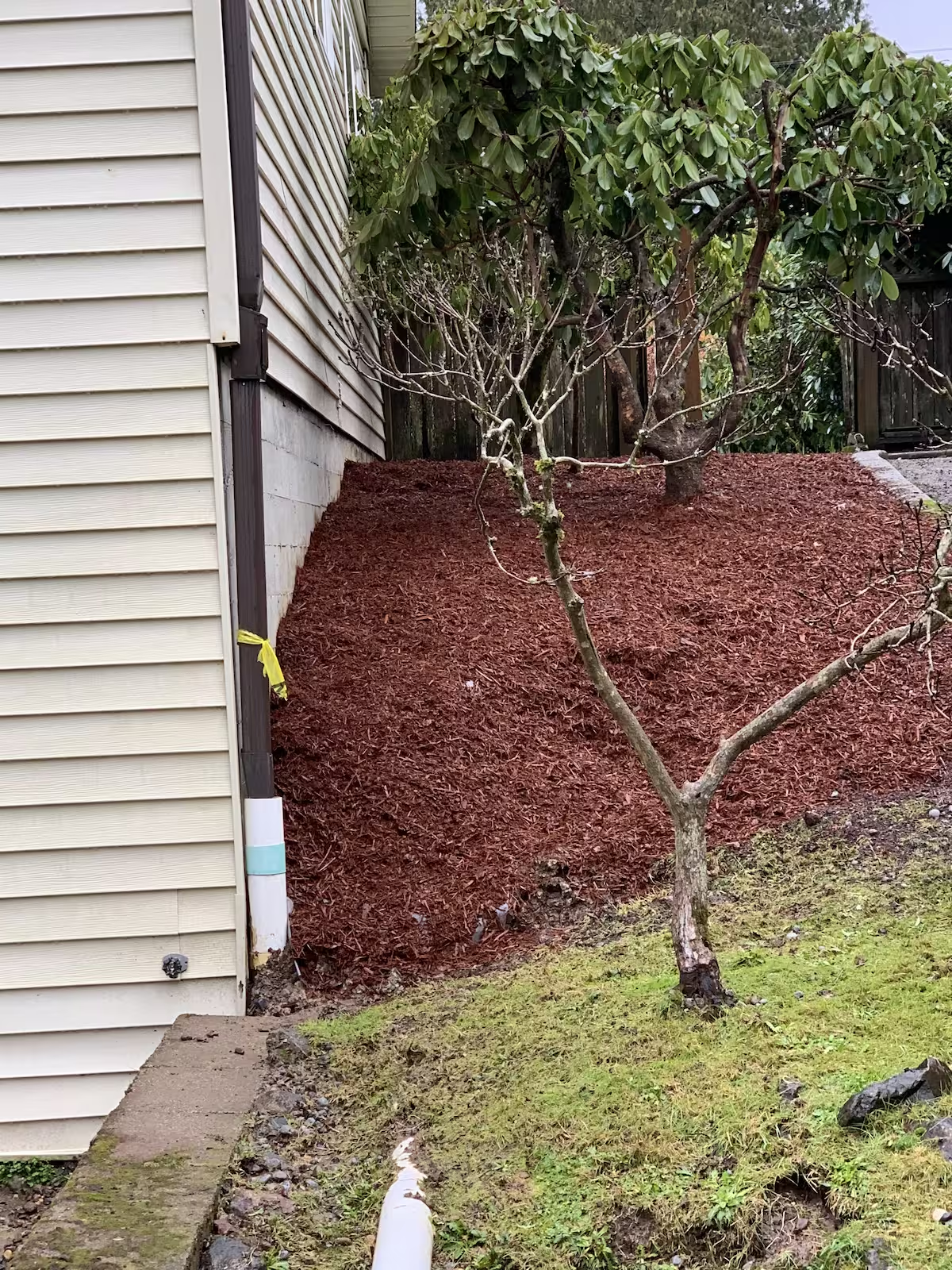
Sloped properties can be beautiful, but water management is critical.
When soil creep, hillside runoff, saturated ground, and hydrostatic pressure begin working against your foundation, small warning signs can become larger problems over time.
The key is addressing the source.
Whether your home is near Historic Downtown Ridgefield, Abrams Park, Gee Creek, the Ridgefield National Wildlife Refuge, the I-5 corridor, or one of Ridgefield’s growing residential neighborhoods, understanding how water moves across your property is an important part of protecting your foundation.
If you are seeing foundation cracks, basement leaks, crawl space moisture, standing water, drainage problems, or other signs of water intrusion, contact Advanced Waterproofing for a professional evaluation.
A properly designed waterproofing and drainage strategy can help protect your foundation, crawl space, basement, and overall home from Southwest Washington’s wet conditions.
Frequently Asked Questions About Sloped Foundation Problems in Ridgefield, WA
What causes foundation problems on sloped properties in Ridgefield?
Several factors can contribute, including hillside runoff, soil movement, saturated ground, inadequate drainage, erosion, poor grading, groundwater, and hydrostatic pressure. The exact cause should be determined through an inspection rather than assumed from the visible symptom.
What is soil creep?
Soil creep is the gradual downhill movement of soil under the influence of gravity. Moisture, erosion, soil composition, vegetation, and slope conditions can influence how soil behaves.
What is hydrostatic pressure?
Hydrostatic pressure occurs when water accumulates in soil and exerts pressure against structures such as basement and foundation walls. Reducing water accumulation around the foundation is an important part of controlling this pressure.
Can hydrostatic pressure crack a foundation?
Water-saturated soil can increase lateral pressure against foundation walls and may contribute to leakage, cracking, or movement, particularly when other soil or structural conditions are present.
Why does my basement leak only after heavy rain?
Leaks that appear after prolonged rainfall can indicate that surrounding soil is becoming saturated. Once water accumulates around the foundation, it may enter through cracks, joints, porous materials, or other vulnerable locations.
Are French drains good for hillside homes?
They can be highly effective when correctly designed and positioned. A French drain can intercept subsurface water moving toward a foundation and redirect it to an appropriate discharge location.
Does a sump pump solve hydrostatic pressure?
A sump pump can be an important component of a waterproofing system because it removes collected water. However, the entire drainage situation should be evaluated to determine whether exterior drainage, grading, foundation waterproofing, or additional measures are also necessary.
Should I worry about water in my Ridgefield crawl space?
Recurring standing water or excessive crawl space moisture should be investigated. Long-term moisture can contribute to mold-friendly conditions, damaged insulation, wood deterioration, dry rot, odors, and other problems.
What are warning signs of a foundation drainage problem?
Common warning signs include leaking cracks, standing water, damp basement walls, crawl space moisture, musty odors, mineral deposits, deteriorating wood, pooling water outside the foundation, uneven floors, and foundation wall movement.
Who provides foundation waterproofing in Ridgefield, WA?
Advanced Waterproofing provides foundation waterproofing, basement waterproofing, crawl space repair, drainage solutions, French drain installation, sump pump installation, dry rot repair, and related services for homeowners in Ridgefield and throughout Southwest Washington.